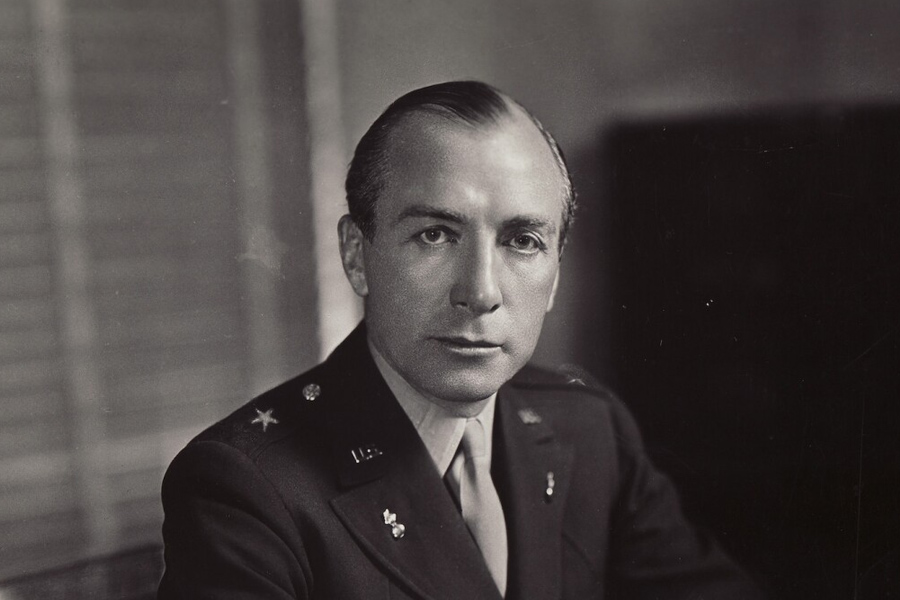
Discovering the Roots of a Titan
I have always been drawn to stories of self-made leaders who turn family businesses into global forces. Robert Wood Johnson Ii stands out as one of the most vivid examples. Born on April 4 1893 in New Brunswick New Jersey he entered the world at the exact moment his fathers company Johnson and Johnson was gaining traction in surgical supplies. His father Robert Wood Johnson I passed away in 1910 when the young man was just 17. That single event thrust him into the family enterprise as an entry level mill hand in the powerhouse. No college degree. No shortcuts. Only raw determination and hands on grit.
By 1915 at age 22 he already headed a department. Four years later in 1919 he climbed to vice president. His energy crackled like electricity through the corridors of the growing firm. He earned the nickname the General later in life not just from his World War II service but from the commanding presence he brought to every challenge. I picture him striding through factories barking orders yet always pausing to listen to workers on the line. That blend of authority and empathy defined him.
Commanding the Family Empire
Family was Robert Wood Johnson’s foundation, and I found the web of relationships intricate and enlightening. Son of Johnson & Johnson co-founder Robert Wood Johnson I, who invented sticky plaster and sterile surgical products. Before her 1919 death, his mother Evangeline Brewster Armstrong Johnson established the early household with power and composure. They reared him with siblings John Seward Johnson I and Roberta Johnson. Early relationships taught him loyalty and legacy.
He married three times per chapter, expanding his inner world. His first wife Elizabeth Dixon Ross, married in October 1916 in New Brunswick, supported him during his early business rises until their 1928 divorce. That connection produced his 1920-born son Robert Wood Johnson III. He married model Margaret Shea in Paris in 1930. That marriage lasted until 1943 and produced Sheila Johnson Brutsch, adopted in 1939. Family records name Margaret Shea as Robert Wood Johnson’s wife during those crucial years. Finally in 1944, he married former ballet dancer Evelyn Paynter Vernon. She lived at Longleat in Princeton following his death and shared his latter years.
His children carried the torch differently. Bobby Johnson III briefly led the corporation, but his father fired him in 1965. Pride and tension characterized the relationship. Living between Palm Beach and Switzerland, Sheila Johnson Brutsch made her own path. Grandchildren expanded the dynasty. Woody Johnson, born 1947, and Christopher Johnson, sons of Robert Wood Johnson III, co-owned the New York Jets and retained the family name in business and philanthropy. To see everything, I made a basic table of their links.
| Relationship to Robert Wood Johnson Ii | Name | Key Details |
|---|---|---|
| Father | Robert Wood Johnson I | Company co founder died 1910 |
| Mother | Evangeline Brewster Armstrong Johnson | Second wife of founder died 1919 |
| First Wife | Elizabeth Dixon Ross | Married 1916 divorced 1928 |
| Second Wife | Margaret Shea | Married 1930 divorced 1943 model |
| Third Wife | Evelyn Paynter Vernon | Married 1944 former ballet dancer |
| Son | Robert Wood Johnson III | Born 1920 company president fired 1965 |
| Daughter | Sheila Johnson Brutsch | Adopted 1939 lived in Palm Beach and Switzerland |
| Grandson | Woody Johnson | Born 1947 New York Jets co owner |
| Grandson | Christopher Johnson | New York Jets co owner |
These ties reveal a man who balanced fierce independence with deep familial duty. Numbers tell part of the story: three marriages two children at least five grandchildren by 1968 and an estate valued at roughly 400 million dollars at the time of his passing much of it in company stock.
Charting a Revolutionary Career Path
Robert Wood Johnson’s career is a bold leadership lesson. He became president in 1932 during the Great Depression. Sales were around $11 million. His leadership prevented major layoffs, gave five percent raises, and launched a Chicago facility in 1933. Sales reached 700 million dollars in 120 countries by the 1940s as Johnson and Johnson had 31 companies in 18 countries. He diversified by founding Ethicon in 1941 and inventing military duct tape in 1942. The company went public 1944.
The one-page Our Credo was his greatest achievement in 1943. Doctors, nurses, patients, and consumers came first, employees second, communities third, and stockholder That constitution-like document still directs the corporation today, inscribed into headquarters walls. His strategy generated finance. Stocks and smart purchases like McNeil Laboratories and Janssen Pharmaceutica made him rich. He emphasized decentralization, giving managers independence while expecting results. I think of his approach as tightrope perfection and daring leaps.
Wartime Heroics and Bold Innovations
WWII tested and advanced him. He became an Ordnance Department brigadier general in 1926 after joining the Army reserve. He chaired the Smaller War Plants Corporation from 1942 to 1943, helping over 6000 small enterprises win contracts. He retired for health reasons but influenced wartime output. In those years, Johnson and Johnson delivered millions of first aid kits. But General Johnson, written in 1944, reflected the chaos and glories of that time. Try Reality (1935) and Or Forfeit Freedom (1947) examined wages, industrial policy, and the environment. He was mayor of Highland Park, New Jersey, from 1920 to 1922 and owned an Atlantic-racing yacht.
A Timeline of Triumphs and Trials
To grasp the sweep of his life I compiled key dates that paint a clear picture. Here they stand in order:
1893 April 4 birth in New Brunswick.
1910 joins Johnson and Johnson at age 17.
1915 department head.
1916 marriage to first wife and rise to general superintendent.
1918 vice president.
1920 son Robert Wood Johnson III born.
1920 to 1922 mayor of Highland Park.
1928 buys Morven estate in Princeton.
1930 marriage to Margaret Shea.
1932 elected president.
1938 board chairman.
1939 adopts Sheila Johnson Brutsch.
1941 founds Ethicon.
1942 to 1943 wartime service as brigadier general.
1943 writes Our Credo marries third wife.
1944 company goes public.
1963 retires at age 70.
1965 dismisses son from company.
1968 January 30 death in New York City at age 74.
These milestones span 75 years of relentless motion. He lived at Morven until the end a historic property that later became the New Jersey Governors Mansion.
The Enduring Echoes in Modern Times
Even decades after his passing Robert Wood Johnson Iis influence ripples outward. The Robert Wood Johnson Foundation which received the bulk of his estate now stands as Americas largest healthcare philanthropy. Family members continue in prominent roles. Mentions surface in discussions of corporate responsibility and New Jersey history. His story surfaces on social platforms during birthdays or business retrospectives reminding us how one leaders choices echo across generations.
FAQ
How did Robert Wood Johnson Ii earn the nickname the General?
He earned it through his brigadier general rank in World War II combined with his decisive commanding style at Johnson and Johnson where he led like a military strategist in the boardroom.
What was the total number of marriages and children for Robert Wood Johnson Ii?
He had three marriages and two children one biological son and one adopted daughter along with multiple grandchildren who extended the family influence.
Which innovation under Robert Wood Johnson Iis leadership became a household staple worldwide?
The Band Aid adhesive bandage gained massive popularity during his early oversight while duct tape emerged from a wartime need in 1942.
How much did Robert Wood Johnson Iis estate contribute to philanthropy?
His estate valued at roughly 400 million dollars at the time with stock holdings later appraised near one billion dollars formed the core funding for the Robert Wood Johnson Foundation.
What single document did Robert Wood Johnson Ii create that still defines Johnson and Johnson culture?
In 1943 he wrote the Our Credo a one page statement prioritizing patients employees communities and stockholders in that order.